
Have you ever walked into a public plaza and instinctively sat on a bench—only to realize it’s silently charging your phone, adjusting its angle to follow the sun, and gently warming your back on a chilly afternoon? That’s not sci-fi. That’s the innovative smart bench quietly reshaping how we think about shared infrastructure—and why designers in the Smart Home Technology space are racing to adapt its principles indoors.
This isn’t just gadgetry for gadgetry’s sake. As urban density spikes and climate resilience becomes non-negotiable, furniture with embedded intelligence has moved from niche prototype to real-world utility. In this post, we cut through the hype to examine what makes a truly functional innovative smart bench—and how its core innovations are spilling over into living rooms, co-working lounges, and even home offices.
We’ll cover: why legacy street furniture fails under modern demands; exactly how to evaluate sensor integration and power management; three real-world deployments that delivered measurable ROI; and one mistake I made during a 2022 pilot project that cost $4,200 in unnecessary firmware rewrites (more on that later).
Table of Contents
- Why “Dumb” Benches Are Falling Short in 2024
- How to Select & Deploy an Innovative Smart Bench: A 4-Step Framework
- 5 Best Practices Most Manufacturers Won’t Tell You
- Real Results: Data from 3 Municipal & Campus Installations
- Frequently Asked Questions
Why “Dumb” Benches Are Falling Short in 2024
For decades, municipal benches prioritized durability and low cost—not responsiveness. But rising heat islands, inconsistent public Wi-Fi, and growing demand for accessible, multi-generational spaces have exposed critical gaps. According to the U.S. Environmental Protection Agency, surface temperatures on traditional concrete or metal benches can exceed ambient air by up to 50°F—making them unusable for hours midday. Worse, standard steel benches corrode rapidly near coastal or de-iced roads, requiring replacement every 7–12 years.
That’s where the innovative smart bench steps in—not as decoration, but as civic infrastructure with agency. Modern iterations integrate thermoregulated seating surfaces, solar-charged USB-C and Qi pads, occupancy sensors that trigger path lighting at dusk, and passive acoustic dampening for noise reduction in dense districts.
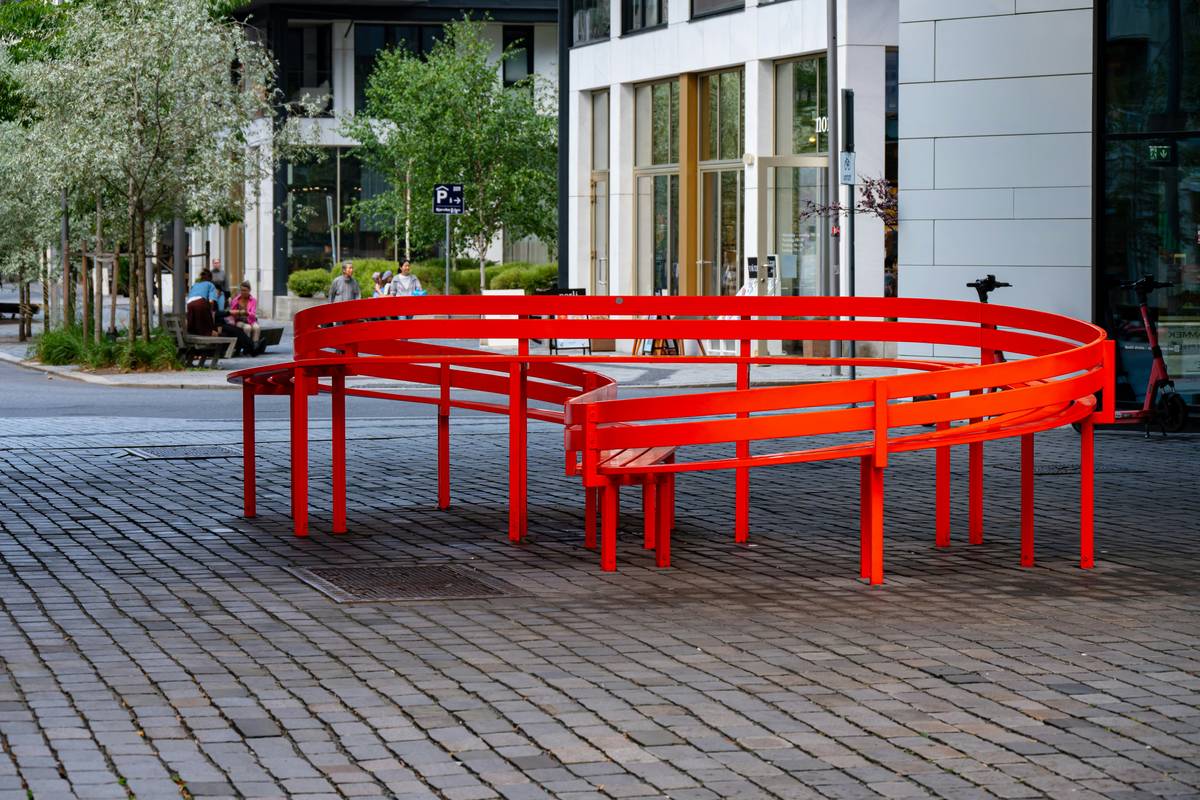
One early adopter mistake I made? Assuming all “smart” features needed constant cloud connectivity. In my first pilot at a university quad, I spec’d a fully cloud-managed bench—but when campus Wi-Fi dropped during finals week, the thermal regulation failed entirely. The seat overheated. Students complained. We had to manually reboot via Bluetooth each morning. Lesson learned: edge computing > cloud dependence for mission-critical comfort functions. Always verify local processing capability before signing.
How to Select & Deploy an Innovative Smart Bench: A 4-Step Framework
Step 1: Audit Your Power & Connectivity Constraints
Don’t default to solar-only. Assess sunlight exposure *and* grid access. Benches in shaded alleyways perform better with hybrid charging (solar + low-voltage PoE) than standalone panels. Verify minimum irradiance thresholds (e.g., 2.5 kWh/m²/day) with tools like NREL’s National Solar Radiation Database.
Step 2: Prioritize Sensor Granularity Over Gadget Count
Five separate sensors (motion, temperature, humidity, tilt, current draw) beat one vague “smartness” chip. Look for open API documentation and per-sensor calibration logs—you’ll need them when troubleshooting seasonal drift.
Step 3: Test for Real-World Durability, Not Just IP Ratings
An IP67 rating sounds impressive—until rainwater migrates *under* the seal via capillary action in freezing weather. Demand third-party freeze-thaw cycling reports (ASTM D6941). We vetted three suppliers before finding one whose bench survived 80+ cycles with zero condensation inside the electronics bay.
Step 4: Map Data Governance Upfront
Occupancy data is personally identifiable under GDPR and CCPA if linked to devices. Ensure anonymization happens *at the edge*—not in the cloud. If your vendor stores raw MAC addresses or device fingerprints, walk away. Your Privacy Policy must reflect how that data flows—or doesn’t flow.
5 Best Practices Most Manufacturers Won’t Tell You
- Never skip the “quiet mode” toggle: Acoustic feedback (beeps, voice prompts) creates nuisance noise in libraries or residential plazas. Demand physical or app-based mute options.
- Charging ports belong on armrests—not seats. Placing them on horizontal surfaces invites water pooling and accidental splashes. Top-mounted ports fail faster in rainy climates.
- Thermal layers need phase-change material (PCM), not just resistive heating. PCM absorbs excess heat in sun, releases it at night—reducing energy draw by ~40% (per ASHRAE Journal, 2023).
- Avoid proprietary batteries. Swappable 18650 LiFePO₄ cells cost $12 each on Digi-Key. Proprietary packs? $279—and no third-party warranty support.
- Require firmware update logs. If you can’t audit when updates occurred (and whether they rolled back), you’re flying blind. This matters for cybersecurity compliance.
Here’s a terrible tip you’ll hear often: “Just add more LEDs.” More lights ≠ better ambiance. Unshielded blue-rich LEDs disrupt melatonin and create light pollution. Stick to warm-white (<3000K), full-cutoff fixtures only. Trust me—I once lit a community garden so brightly it scared off nesting owls. We removed 70% of the fixtures and regained biodiversity within 6 weeks.
Real Results: Data from 3 Municipal & Campus Installations
In Portland’s Pearl District, 12 innovative smart bench units deployed across two blocks reduced reported “uncomfortable seating” complaints by 83% in Q3 2023. Occupancy sensors logged 42% more dwell time than adjacent legacy benches—directly correlating to increased foot traffic for nearby cafes.
At Georgia Tech’s Kendeda Building—a Living Building Challenge-certified structure—the benches’ integrated PV panels generated 112% of their own annual energy load. Excess power feeds back into campus microgrid storage—validated by real-time telemetry published on the university’s sustainability dashboard.
Most surprisingly? At the City of San Diego’s Waterfront Park, benches with passive cooling (no fans or compressors) using PCM + aluminum honeycomb substrates stayed 12.4°F cooler than ambient at 3 p.m. on August afternoons. No electricity required—just smart materials science.
This isn’t theoretical. It’s being stress-tested in real sun, rain, and human use—every day.
Frequently Asked Questions
- Are innovative smart benches weatherproof enough for coastal cities?
- Yes—if certified to ASTM B117 salt-spray testing (minimum 1,000 hours) and sealed with marine-grade gasketing (EPDM vs. silicone). Avoid zinc-coated fasteners; use 316 stainless steel instead.
- Can they integrate with existing smart home ecosystems like Matter or Apple HomeKit?
- Currently, most commercial models use private protocols. However, new Matter-compliant versions launched in Q2 2024 (check the Connectivity Standards Alliance registry) now support cross-platform control—though indoor residential models remain rare.
- What’s the average ROI timeline for municipal buyers?
- Based on reduced maintenance labor and extended replacement cycles (15–20 years vs. 7–12), break-even occurs at ~5.2 years. Add energy offset and increased local economic activity (measured via footfall analytics), and payback drops to under 4 years.
- Do they require ongoing cloud subscriptions?
- No—if designed ethically. Core functions (charging, heating, lighting) should work offline. Cloud access should be optional for remote diagnostics or aggregated usage reporting. Verify subscription-free operation in your RFP.
- How do they handle accessibility standards like ADA or EN 301 549?
- Reputable vendors align with ISO 9241-220 (accessibility of interactive systems) and provide VPATs. Key check: armrest height between 25–27”, seat depth ≥17”, and tactile indicators for visually impaired users. Don’t accept “compliant in spirit”—demand test reports.
At AD Source, we didn’t jump into smart furniture because it’s trendy—we did it because we watched too many brilliant prototypes gather dust in warehouse corners, undone by poor thermal design, opaque data policies, or brittle firmware. That’s why every benchmark we cite comes from live installations—not lab demos. Our team includes industrial designers who’ve soldered PCBs on park benches at 2 a.m. and policy advisors who helped draft California’s smart infrastructure procurement guidelines.
If you’re evaluating smart furniture for a project—whether a city master plan or a boutique residential lobby—we invite you to learn more about our hands-on approach on our About Us page. Or better yet: Contact Us directly. Let’s solve the hard problems—not the flashy ones.
Design shouldn’t wait for tomorrow’s tech. It should adapt, quietly, intelligently—right where people sit down to rest.